
-
Category 2
Selected in 2025
-
Grades: k - 8
School Setting: rural
Town Population: 105
Student Enrollment: 104
Student Demographics:
Black/African American: 0%
Teacher/Student Ratio: 1:17.3
White/Caucasian: 6.3%
Hispanic: 2.9%
Hawaiian/Pacific Islander: 0%
Asian: 1.9%
Native American: 88.5%
Other: 0%
% Reduced Lunch: 100%
% ELL Learners: 1.9%
Founded: 1969 -
PRINCIPAL:
Cliff Angle -
CONTACT:
12491 N Byers St
Peach Springs, AZ 86434
928-769-2310
mr.angle@valentineaz.net
Valentine Elementary School
Peach Springs, AZ
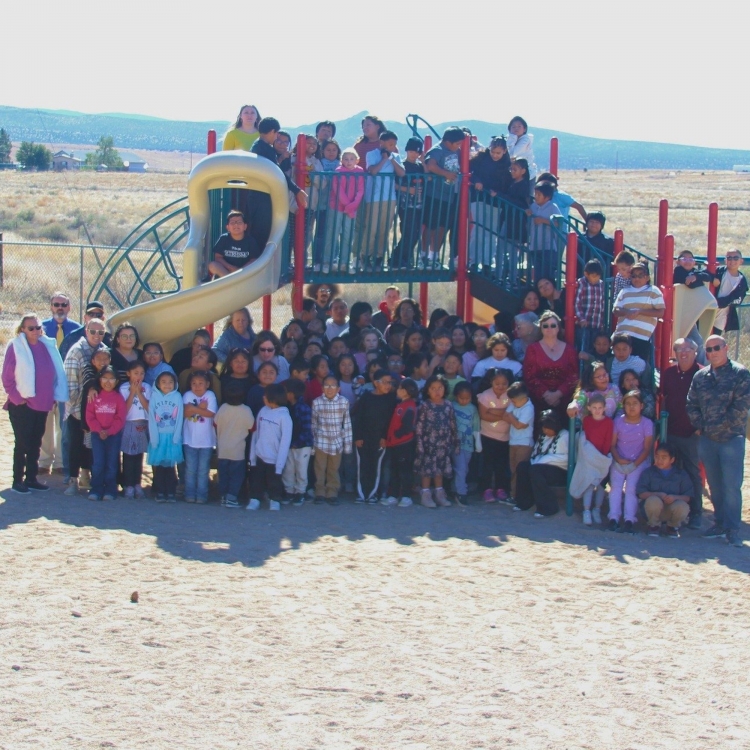
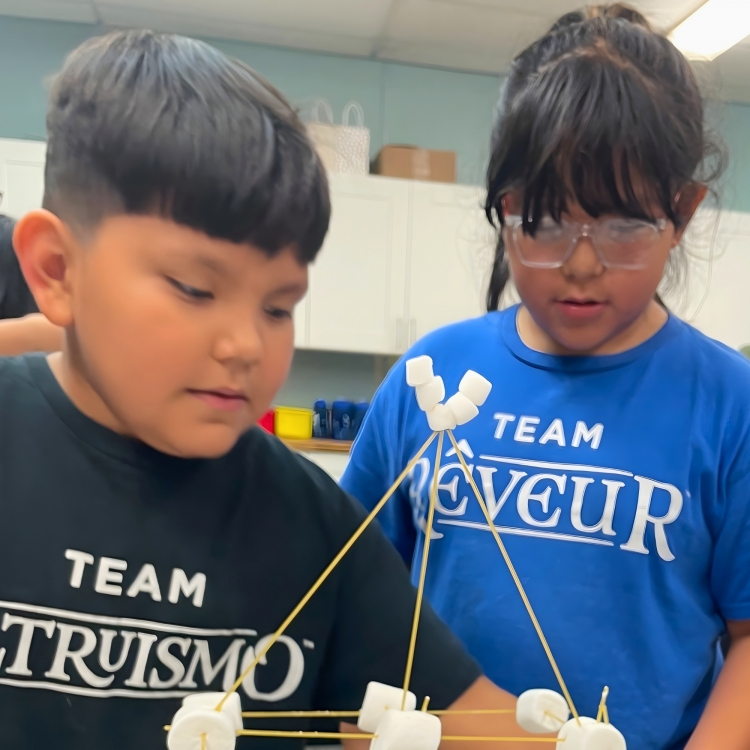
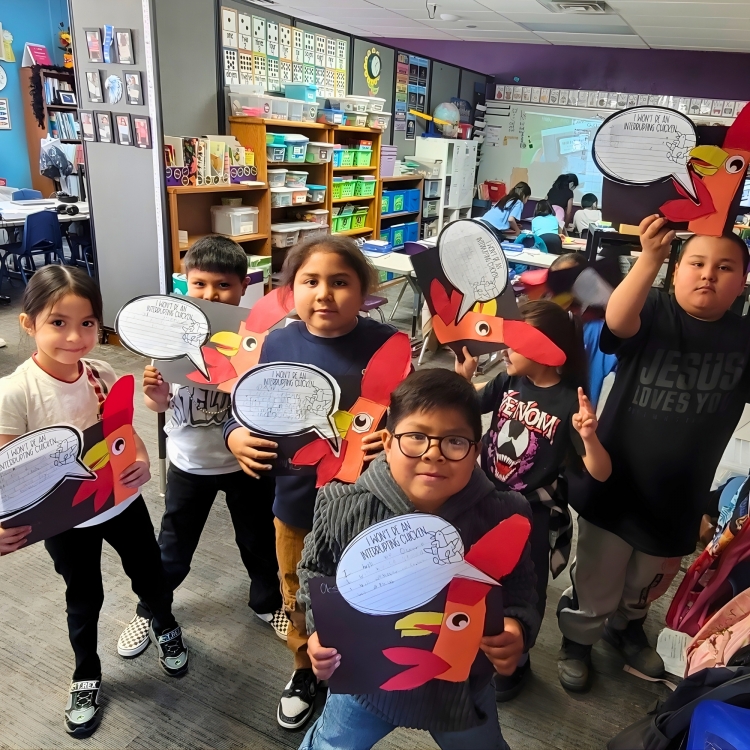

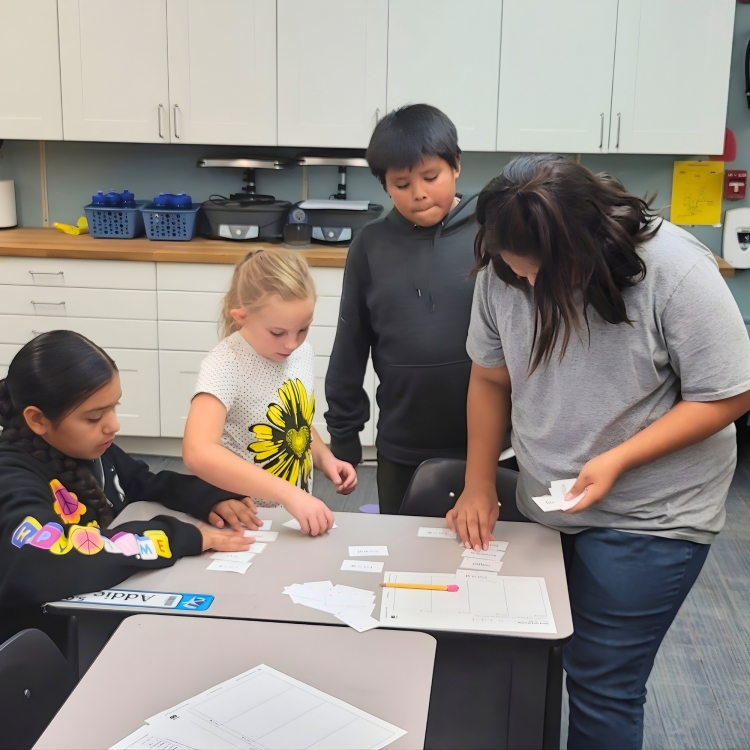

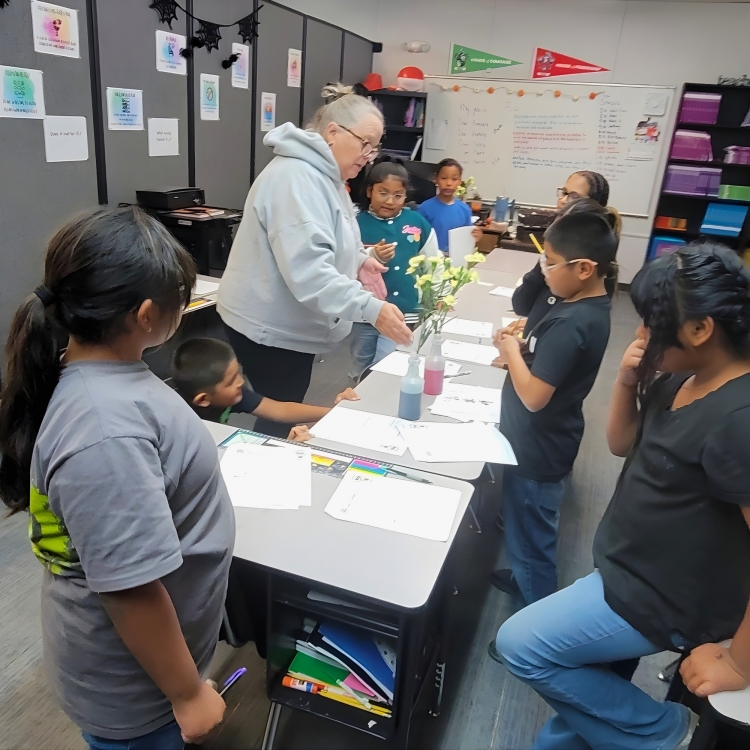

- 1. What key actions or strategies have been most instrumental to your school’s success?
- The most instrumental strategy our school undertook was the implementation of the House system. Giving the students a House to belong to – an extended family – was critical, as many of our students lost one or more family members during COVID. Many of our students are raised by grandparents or aunties because their parents are not positively involved in their lives. Few students had future stories. By implementing the House system, we provided opportunities for older students to take on positions of leadership and serve as role models to their peers and younger students, and we provided an opportunity for all students to have something to work towards. All of the data digs and academic interventions in the world would not have been effective if we had not improved the culture of the school so that students felt comfortable enough to engage in learning.
- 2. What significant challenges did your school face during your improvement efforts, and how did you address them?
- The most significant challenges we faced during our improvement efforts were resistance to change and time pressure. Many instructional staff had been in their positions for several years with well-established methods. Our 22-23 letter grade (F) was a wake-up call that how the school operated had to change immediately, and starting with climate and culture. The House system received little resistance because it required small effort: wear the House shirts, record student points, celebrate successes. The greater resistance was to changes expected in their instructional practices: more student engagement, attention to data, and accountability for teaching and learning. This was slowly overcome by professional development presenters modeling what teachers were expected to do in their classrooms. Data was a regular item on the PLC agendas. There was no way for instructional staff to avoid them – these changes were happening. Successes were celebrated, which led to more successes.
- 3. How did professional development contribute to your school’s improvement efforts?
- The House system was a program that our school staff had not had any previous experience with, so professional development on the implementation and maintenance of that system was vital. Staff had to learn how to allow the system to become an integral part of their daily routines without overpowering classroom instruction. In addition, instructional staff received professional development on topics such as changing mindsets, student engagement and assessment strategies, data analysis and decision-making, and differentiated and small-group instruction. After implementing the first few changes, teachers began to see student improvement, which led to greater willingness to implement further changes.
- 4. In what ways did family and/or community partnerships support your school’s success?
- Since we have few students within our attendance area, the vast majority of our families must apply for their students to attend. We actively engage our families through a variety of means, including our Facebook and Instagram pages, school smartphone and House points apps, and website. Families turn out for our Title I events, student-led conferences, awards assemblies, field trips, and House competitions, as well as our annual performances and field days. Our Parent Volunteer Organization continues to grow its numbers. We have a positive working relationship with the local radio station on the Hualapai reservation. KWLP regularly broadcasts public service announcements promoting our school events and other information. Our continuing partnership with the neighboring school district allows our students to participate in the School Breakfast and National School Lunch Programs so that our students do not have to spend time and energy being hungry but can instead focus on their learning.
- 5. How has ESEA funding (e.g., Title I, II, III) been strategically used to support student achievement?
- Valentine Elementary School utilized its ESEA funding to implement and sustain our House system modeled after the Ron Clark Academy in Atlanta, Georgia. Our school also leveraged school improvement grant funding to fully participate in the system, including the use of the House points app and attendance at professional development. This strategy enabled Valentine Elementary School to join dozens of schools who reported in a July 2025 survey that they had reaped the benefits of a reduction in discipline referrals and increases in attendance and family involvement. Our school climate and culture improved, as did staff morale and engagement with students, with the end result being increased academic achievement.
- 6. What advice would you give to a school just beginning its improvement journey?
-
Dear _______ School,
As you begin your journey of school improvement, we recommend keeping these thoughts in mind:
• Make every decision in the best interest of students. When they feel safe and cared about, their brains are better attuned to learn new things.
• Have quality conversations about achievement data with staff and students (it is their data, after all) and discuss strategies for how to adjust teaching and learning accordingly.
• Remember change is often hard and takes time. Look for where speed bumps or roadblocks may occur, and proactively address them. Inspect what you expect and celebrate the successes, no matter how minor. Success begets success – in students and in adults.
• Seek perspectives from outside your school. Have them review your plan. Be open-minded about their feedback. People are often too close to a situation to be 100% objective about what steps should be taken, especially when those steps involve people.
• Persevere and follow-through. You got this.
Stats
-
Category 2
Selected in 2025
-
Grades: k - 8
School Setting: rural
Town Population: 105
Student Enrollment: 104
Student Demographics:
Black/African American: 0%
Teacher/Student Ratio: 1:17.3
White/Caucasian: 6.3%
Hispanic: 2.9%
Hawaiian/Pacific Islander: 0%
Asian: 1.9%
Native American: 88.5%
Other: 0%
% Reduced Lunch: 100%
% ELL Learners: 1.9%
Founded: 1969 -
PRINCIPAL:
Cliff Angle -
CONTACT:
12491 N Byers St
Peach Springs, AZ 86434
928-769-2310
mr.angle@valentineaz.net
ESEA Network
The National Association of ESEA State Program Administrators is dedicated to building the capacity of education professionals to provide disadvantaged children with a high quality education. Their ESEA Network website provides a host of resources to educators at all levels.
Connect With Us
 |
 |
 |
 |
Contact Us
admin@eseanetwork.org | 800-256-6452
532 North Franklin Street | Fort Bragg, CA 95437
About Us
The National Association of ESEA State Program Administrators (formerly the National Title I Association) is dedicated to building the capacity of education professionals to provide disadvantaged children with a high quality education. Their ESEA Network website provides a host of resources to educators at all levels.
Connect with Us
|
|
|
|