
-
Category 2
Selected in 2025
-
Grades: pre k - pre k
School Setting: urban
Town Population: 0
Student Enrollment: 1,450
Student Demographics:
Black/African American: 5%
Teacher/Student Ratio: 1:15
White/Caucasian: 7%
Hispanic: 80%
Hawaiian/Pacific Islander: 0%
Asian: 5%
Native American: 3%
Other: 0%
% Reduced Lunch: 100%
% ELL Learners: 65%
Founded: 1976 -
PRINCIPAL:
Dr. Jason Jefferson -
CONTACT:
400 W Laurel Ave
Sterling, VA 20164
571-434-4500
jason.jefferson@lcps.org
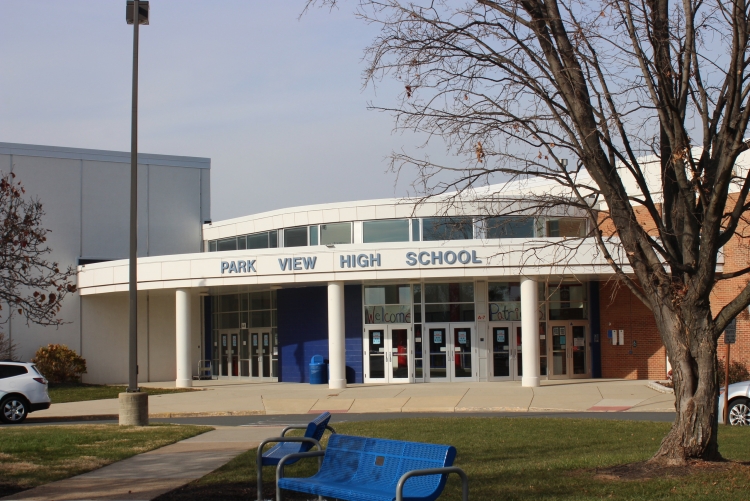
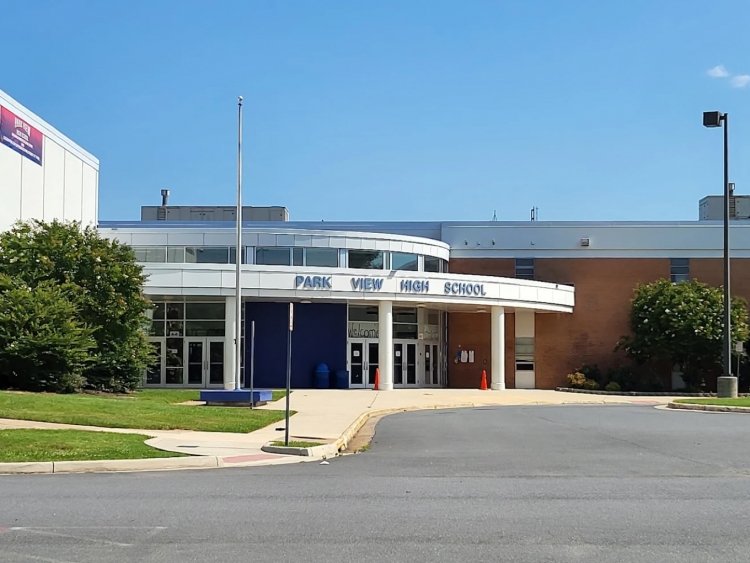
Park View High School
Sterling, VA

- 1. What key actions or strategies have been most instrumental to your school’s success?
- Success was driven by data-driven instruction, targeted interventions, and specialized staffing. Implementation of the Data Wise framework enabled Collaborative Learning Teams to identify gaps and adjust instruction based on performance data. Targeted interventions like the Math Bootcamp and Math Lab provided focused remediation that closed gaps for vulnerable subgroups. Strategic staffing, such as co-teaching by dually certified teachers in lower-level classes, ensured embedded support for English Learners and special education students. Professional development, including QTEL training, gave teachers tools to scaffold instruction for diverse learners. Furthermore, the school prioritized personal relationships and "family-like bonds" by celebrating successes and providing holistic supports like meals and technology. These combined strategies fostered student resilience and transformed academic outcomes. We also did an administrative restructuring of our school.
- 2. What significant challenges did your school face during your improvement efforts, and how did you address them?
-
Park View faced severe achievement gaps, with math pass rates for homeless students at 26% and English Learners at 29%. Challenges included complex socio-economic needs, language barriers, and a lack of student confidence.
The school addressed these through data-driven instruction using the Data Wise framework and CLTs to identify learning gaps. Specialized staffing was key; lower-level classes were co-taught by dually certified teachers. QTEL training equipped staff to scaffold content for language learners. Logistical barriers like hunger were removed by providing meals, while Math Bootcamp offered intensive remediation. Finally, staff built "family-like bonds" by personally escorting students to sessions. - 3. How did professional development contribute to your school’s improvement efforts?
-
Professional development strengthened instruction through data literacy, specialized strategies for diverse learners, and collaborative structures. Math teachers completed Data Wise Training to support data-driven decision-making and identify learning gaps. Science teachers received DataSpire training in data analysis and utilized weekly CLT meetings to adjust instruction based on assessment trends.
To support English Learners, math, science, and EL teachers participated in QTEL training to master scaffolding and academic vocabulary strategies. Biology teachers implemented Ambitious Science Teaching, using visual models to help students document their understanding.
Collaborative Learning Teams (CLTs) allowed staff to unpack standards and plan targeted remediation. Additionally, attending national conferences provided evidence-based strategies for school improvement. Training on digital platforms enabled teachers to provide individualized practice. - 4. In what ways did family and/or community partnerships support your school’s success?
- Success was driven by a robust network of family and community partnerships. Teachers communicate directly with families about performance and missing assessments to reinforce accountability. The Parents as Educational Partners (PEP) program holds monthly meetings regarding high-stakes testing and available supports. Community level, Mu Alpha Theta provides peer tutoring to increase student confidence, while local volunteers offer mentorship and academic encouragement. Beyond the sources, you noted partnerships with local churches and fraternities for mentoring, food pantries for family support, and the PTSA on various projects; this information is not in the sources and should be independently verified. These external links, combined with "family-like bonds" between staff and students, create a whole-child support system. This collaborative culture empowers students to overcome complex challenges and achieve success.
- 5. How has ESEA funding (e.g., Title I, II, III) been strategically used to support student achievement?
- Federal funding was strategically used to improve achievement by targeting personnel, professional development, and student barriers. Staffing was enhanced by hiring academy staff, funding substitutes for intensive Math Boot Camps, and implementing co-teaching models with dually certified math, special education, and English learner specialists. Professional learning included QTEL training to scaffold instruction for English learners, Data Wise for evidence-based decision making, and DataSpire for science data analysis. Classrooms were modernized with flexible kidney bean desks, NumWorks calculators, and iPads integrated with Promethean Boards to facilitate interactive learning. To ensure engagement, funds provided snacks to remove hunger as a barrier and incentives to motivate participation in remediation. These investments resulted in measurable academic gains, such as a 46-point math pass rate increase for homeless students
- 6. What advice would you give to a school just beginning its improvement journey?
-
The most important advice is to start with people, purpose, and data. Build strong relationships within the school and the broader community by developing a dedicated team focused on supporting the whole school. Invite parents to be active partners in the process and maintain open, honest, and consistent communication so everyone feels informed and valued.
Use data intentionally to guide decisions and set priorities. Academic, attendance, behavior, and perception data should be used as tools for reflection and improvement,not blame. Data helps identify strengths, areas of need, and whether strategies are making a positive impact over time.
Be willing to think outside the box and remain flexible. School structures and systems should adapt to meet the needs of students and staff as the work evolves. Above all, keep the main thing the main thing: ensuring teachers and students are in a safe, supportive environment where effective teaching and meaningful learning can take place every day.
Stats
-
Category 2
Selected in 2025
-
Grades: pre k - pre k
School Setting: urban
Town Population: 0
Student Enrollment: 1,450
Student Demographics:
Black/African American: 5%
Teacher/Student Ratio: 1:15
White/Caucasian: 7%
Hispanic: 80%
Hawaiian/Pacific Islander: 0%
Asian: 5%
Native American: 3%
Other: 0%
% Reduced Lunch: 100%
% ELL Learners: 65%
Founded: 1976 -
PRINCIPAL:
Dr. Jason Jefferson -
CONTACT:
400 W Laurel Ave
Sterling, VA 20164
571-434-4500
jason.jefferson@lcps.org
ESEA Network
The National Association of ESEA State Program Administrators is dedicated to building the capacity of education professionals to provide disadvantaged children with a high quality education. Their ESEA Network website provides a host of resources to educators at all levels.
Connect With Us
 |
 |
 |
 |
Contact Us
admin@eseanetwork.org | 800-256-6452
532 North Franklin Street | Fort Bragg, CA 95437
About Us
The National Association of ESEA State Program Administrators (formerly the National Title I Association) is dedicated to building the capacity of education professionals to provide disadvantaged children with a high quality education. Their ESEA Network website provides a host of resources to educators at all levels.
Connect with Us
|
|
|
|