
-
Category 1
Selected in 2025
-
Grades: pre k - 12
School Setting: rural
Town Population: 1,545
Student Enrollment: 547
Student Demographics:
Black/African American: 2%
Teacher/Student Ratio: 1:17
White/Caucasian: 77%
Hispanic: 17%
Hawaiian/Pacific Islander: 0%
Asian: 2%
Native American: 0%
Other: 0%
% Reduced Lunch: 64.6%
% ELL Learners: 7%
Founded: 1910 -
PRINCIPAL:
James Simmons -
CONTACT:
800 Q St.
Bridgeport, NE 69336
308-262-5415
jsimmons@bpsbulldogs.org
Bridgeport Elementary School
Bridgeport, NE

- 1. What key actions or strategies have been most instrumental to your school’s success?
-
Our MTSS team, K-3 reading team, and school improvement team have been vital in meeting our goals. MTSS has done book studies. K-3 Reading team set up interventions and teachers were trained in the specific areas to better assist student learning.
Over the past five years we have adopted a new K-5 reading curriculum and a new 6-12 reading curriculum. We looked at numerous companies and sent teachers to school visits as well as zoomed with teachers from other districts. We did the same with math curriculum before ultimately deciding to stay with the company we have had so much success with previously.
Our school improvement team targets chronic absenteeism and we have begun to reward students who meet criteria of great attendance.
- 2. What significant challenges did your school face during your improvement efforts, and how did you address them?
-
Before we instituted the schedule for K-3 reading interventions, we had all our teachers/paras trained in interventions. We then built out a schedule incorporating specialists teachers as interventionalists as well.
There was a question of teacher buy in at the beginning. We had several teachers who were “old school” in their way of thinking. The staff really stepped up and went all in making instruction seem fun and interesting for the students. Schedules were picked up immediately, instruction time was maximized, school culture began to change.
- 3. How did professional development contribute to your school’s improvement efforts?
-
If teachers seek out professional development, we send them. We also send our paraprofessionals to a lot of professional development. When we did our new curriculum adoption, we asked the presenters to come on sight for multiple days, turning down the zoom sessions we would have otherwise gotten.
We have had our interventionalists trained in the specific program they are using. We do updates for teachers as well. Professional development has been critical in getting our students to where we want them to be.
For the past seven years we have sent teachers to the Ron Clark Academy in Atlanta, Georgia. We do this do learn teaching practices, though to also recharge teachers batteries.
- 4. In what ways did family and/or community partnerships support your school’s success?
-
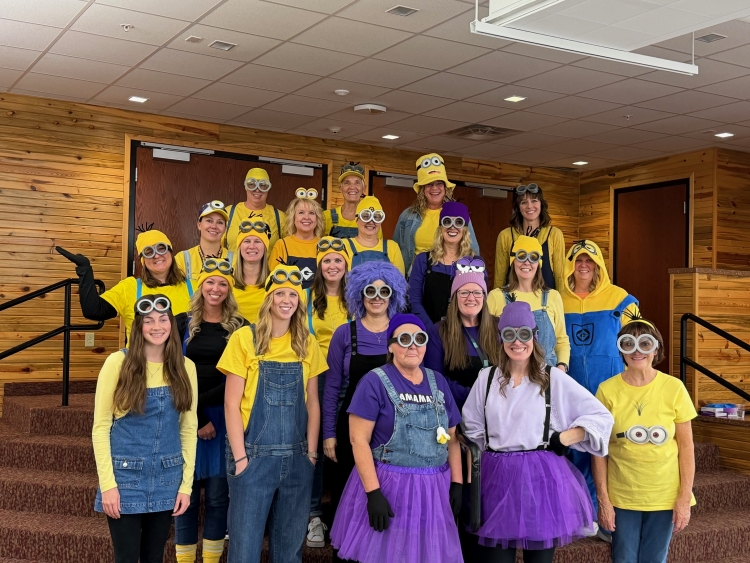
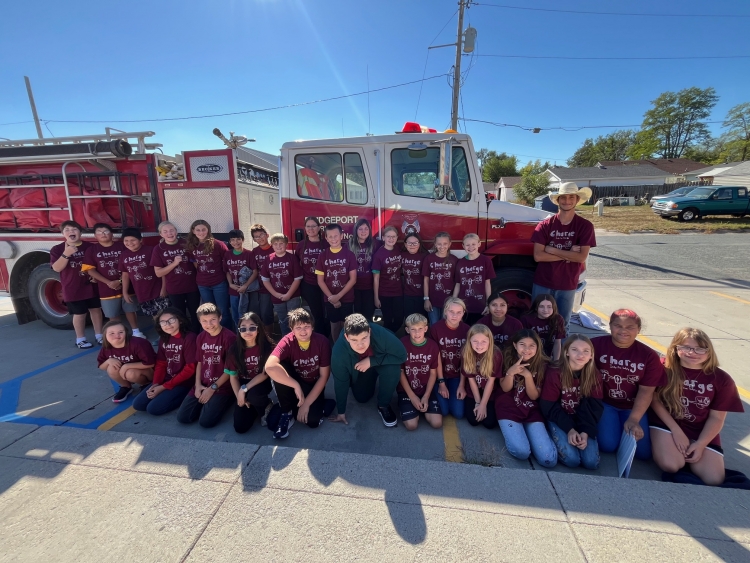
Our community is very involved in the school, and the school is very active in the community. We allow our facility to house Boy Scouts, Girl Scouts, and Robotics meetings. We partner with the local city library on numerous events which are K-12, not just K-6. We have several volunteers from the community who come in and lead small groups, read to students, or assist with projects.
Through the Teammates Program, we have 66 matches of students with mentors. Our High School National Honor Society also mentors struggling students. We have four current high school seniors who are doing a work-study program in elementary classrooms.
Our students do activities with the food pantry, assisted living, and community center. Our school is the hub of our community, and we are grateful for their support.
- 5. How has ESEA funding (e.g., Title I, II, III) been strategically used to support student achievement?
- Funds are used to pay for our after-school tutoring program. We also use funds to offset teacher salaries to keep our student-teacher ratio low in our kindergarten classrooms.
- 6. What advice would you give to a school just beginning its improvement journey?
- I think you have to get the buy in from your staff. Go all in. Do what is right for the student even if it ruffles feathers or is unconventional in lines of traditional education. Flexible seating, letting students stand on desks, movement, innovation. Education is evolving and teachers must evolve too. Support. Constant support. Support from the top down, including the School Board, and a shared vision. Once everyone is working towards the same goal, really feeling they are a part of something special, the results will be what you want them to be.
Stats
-
Category 1
Selected in 2025
-
Grades: pre k - 12
School Setting: rural
Town Population: 1,545
Student Enrollment: 547
Student Demographics:
Black/African American: 2%
Teacher/Student Ratio: 1:17
White/Caucasian: 77%
Hispanic: 17%
Hawaiian/Pacific Islander: 0%
Asian: 2%
Native American: 0%
Other: 0%
% Reduced Lunch: 64.6%
% ELL Learners: 7%
Founded: 1910 -
PRINCIPAL:
James Simmons -
CONTACT:
800 Q St.
Bridgeport, NE 69336
308-262-5415
jsimmons@bpsbulldogs.org
ESEA Network
The National Association of ESEA State Program Administrators is dedicated to building the capacity of education professionals to provide disadvantaged children with a high quality education. Their ESEA Network website provides a host of resources to educators at all levels.
Connect With Us
 |
 |
 |
 |
Contact Us
admin@eseanetwork.org | 800-256-6452
532 North Franklin Street | Fort Bragg, CA 95437
About Us
The National Association of ESEA State Program Administrators (formerly the National Title I Association) is dedicated to building the capacity of education professionals to provide disadvantaged children with a high quality education. Their ESEA Network website provides a host of resources to educators at all levels.
Connect with Us
|
|
|
|