
-
Category 3
Selected in 2025
-
Grades: pre k - 5
School Setting: rural
Town Population: 9
Student Enrollment: 159
Student Demographics:
Black/African American: 0%
Teacher/Student Ratio: 1:15
White/Caucasian: 96.2%
Hispanic: 0%
Hawaiian/Pacific Islander: 0%
Asian: 1.3%
Native American: 1.3%
Other: 1.3%
% Reduced Lunch: 48.4%
% ELL Learners: 0%
Founded: 1915 -
PRINCIPAL:
Jacob Walker -
CONTACT:
900 New Bethel Road
Tuscumbia, AL 35674
256-383-6471
jwalker@colbertk12.org
New Bethel Elementary School
Tuscumbia, AL

- 1. What key actions or strategies have been most instrumental to your school’s success?
- One of the most instrumental strategies in our school’s success is our strong sense of collective efficacy. Every adult in our building—teachers, support staff, administrators, and specialists—works together with a shared belief that our actions directly impact student success. We operate with a “whatever it takes” mindset. There are no egos and no silos; when a need arises, we step in. No one says, “That’s not my job.” Instead, we focus on doing what is best for students, supporting one another, and ensuring that every child receives what they need to grow. This unified commitment has been the foundation of our success.
- 2. What significant challenges did your school face during your improvement efforts, and how did you address them?
-
Since the Covid-19 pandemic, one of our greatest challenges has been rebuilding and accelerating student learning while also reestablishing consistent school routines and expectations. The academic gaps, social-emotional needs, and inconsistent attendance patterns that surfaced after the pandemic required us to rethink how we supported students and staff.
To address these challenges, we focused on intentional, schoolwide systems: strengthening core instruction, analyzing data frequently, providing targeted interventions, and reinforcing consistent expectations across classrooms. We also prioritized relationships—rebuilding trust with families, supporting teachers, and creating a stable, predictable environment for students. Through this steady, unified effort, we have been able to regain momentum and ultimately reach the level of success we are experiencing today. - 3. How did professional development contribute to your school’s improvement efforts?
-
Professional development played a critical role in our school’s improvement efforts by ensuring that our staff had the knowledge, skills, and shared practices needed to move forward together. We focused on intentional, ongoing training aligned to our goals—strengthening core instruction, using data effectively, and implementing consistent schoolwide systems.
Our PD was not “one and done.” It was job-embedded, collaborative, and immediately applicable in classrooms. Teachers engaged in coaching cycles, PLCs, and follow-up support that helped them refine instruction and maintain high expectations. As our staff grew in confidence and expertise, that growth translated directly into stronger student outcomes.
In short, professional development unified our team, elevated instructional practice, and provided the momentum that pushed our school toward sustained improvement. - 4. In what ways did family and/or community partnerships support your school’s success?
-
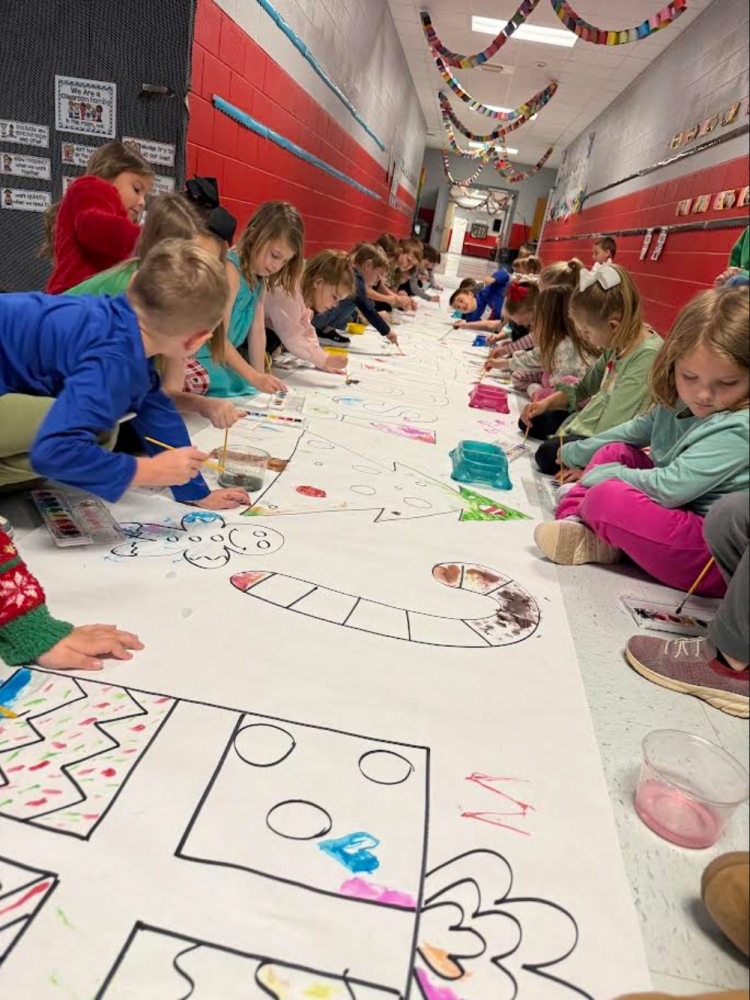
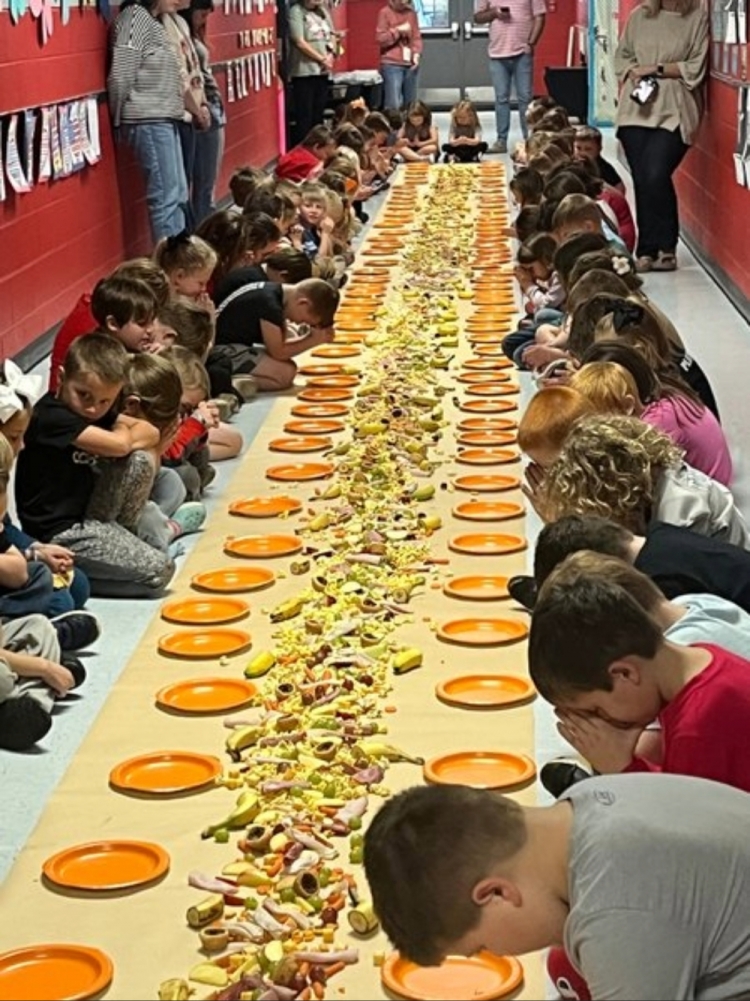
Family and community partnerships have been essential to our school’s success, especially in our small New Bethel community. While we have limited local businesses, the ones we do have provide tremendous support.
Our families consistently show up, contribute, and work alongside us to create the best environment for students. They volunteer, support learning at home, attend events, and respond quickly whenever a need arises.
We also deeply value the support we receive from our community entities, including the Volunteer Fire Department and our local churches, whose encouragement and resources help strengthen our school community.
The tight-knit, all-in spirit of New Bethel is a powerful force behind our success and the success of our students. - 5. How has ESEA funding (e.g., Title I, II, III) been strategically used to support student achievement?
- ESEA funding has been strategically used to directly support student achievement by targeting resources where they are most needed. Title I funds have been invested in intervention programs, supplemental instructional materials, and additional support staff to help close learning gaps and accelerate student growth.
- 6. What advice would you give to a school just beginning its improvement journey?
-
Start with a shared belief that every student can succeed and that your team has the power to make it happen. Focus on building collective efficacy—get everyone on the same page, support one another, and embrace a “whatever it takes” mindset.
Set clear goals, use data to guide decisions, and provide consistent support and professional development for staff. Celebrate small wins along the way, and remember that improvement is a marathon, not a sprint. Strong relationships—with staff, students, families, and your community—are just as important as academics.
Above all, stay committed, stay unified, and never let “that’s not my job” become part of your culture.
Stats
-
Category 3
Selected in 2025
-
Grades: pre k - 5
School Setting: rural
Town Population: 9
Student Enrollment: 159
Student Demographics:
Black/African American: 0%
Teacher/Student Ratio: 1:15
White/Caucasian: 96.2%
Hispanic: 0%
Hawaiian/Pacific Islander: 0%
Asian: 1.3%
Native American: 1.3%
Other: 1.3%
% Reduced Lunch: 48.4%
% ELL Learners: 0%
Founded: 1915 -
PRINCIPAL:
Jacob Walker -
CONTACT:
900 New Bethel Road
Tuscumbia, AL 35674
256-383-6471
jwalker@colbertk12.org
ESEA Network
The National Association of ESEA State Program Administrators is dedicated to building the capacity of education professionals to provide disadvantaged children with a high quality education. Their ESEA Network website provides a host of resources to educators at all levels.
Connect With Us
 |
 |
 |
 |
Contact Us
admin@eseanetwork.org | 800-256-6452
532 North Franklin Street | Fort Bragg, CA 95437
About Us
The National Association of ESEA State Program Administrators (formerly the National Title I Association) is dedicated to building the capacity of education professionals to provide disadvantaged children with a high quality education. Their ESEA Network website provides a host of resources to educators at all levels.
Connect with Us
|
|
|
|