
-
Category 1
Selected in 2025
-
Grades: k - 5
School Setting: rural
Town Population: 2
Student Enrollment: 310
Student Demographics:
Black/African American: 0%
Teacher/Student Ratio: 1:20
White/Caucasian: 93.5%
Hispanic: 5.9%
Hawaiian/Pacific Islander: 0%
Asian: 0%
Native American: 0.7%
Other: 0%
% Reduced Lunch: 57%
% ELL Learners: 0%
Founded: 1959 -
PRINCIPAL:
Emily Transtrum -
CONTACT:
535 Clay St
Montpelier, ID 83254
208-847-0477
etranstrum@blsd.net
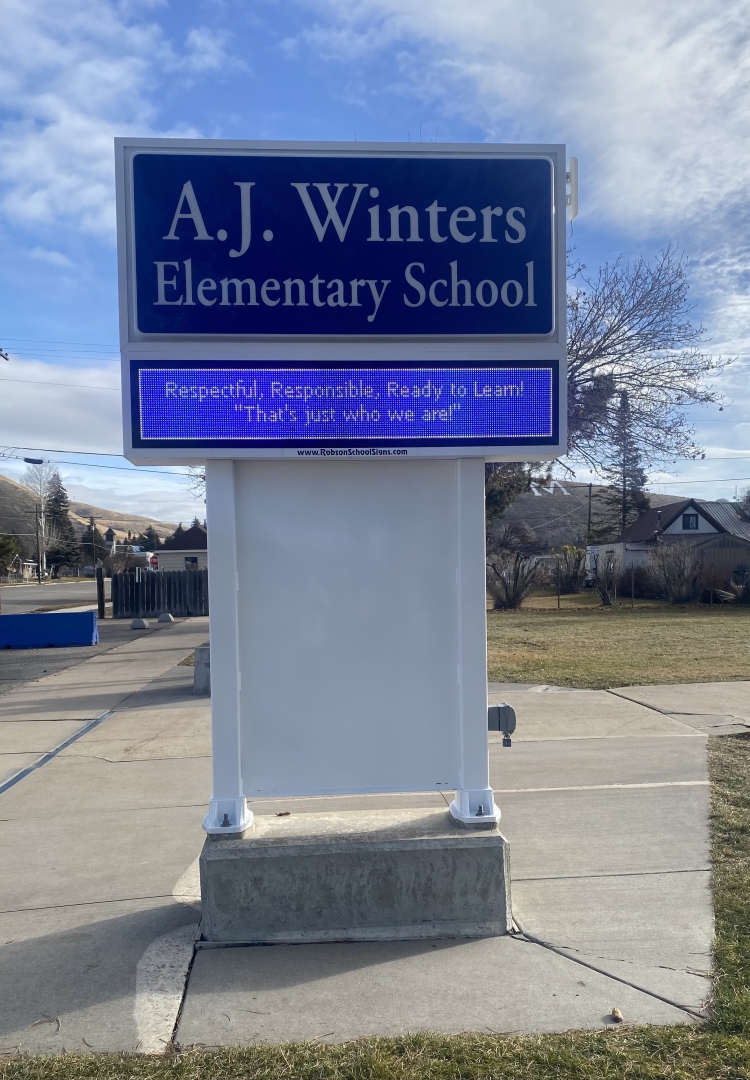
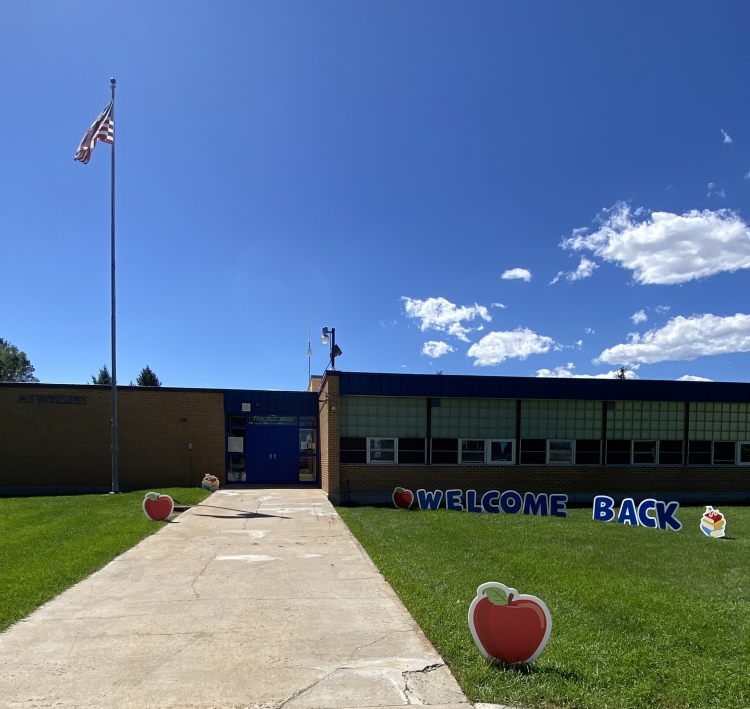
AJ Winters Elementary School
Montpelier, ID
- 1. What key actions or strategies have been most instrumental to your school’s success?
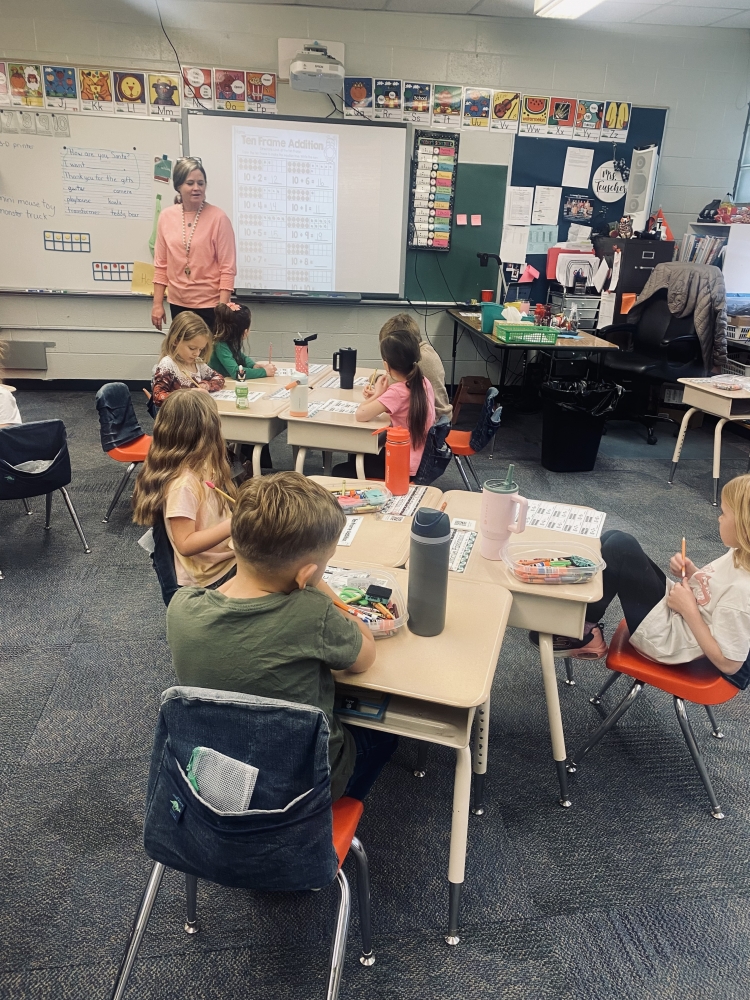
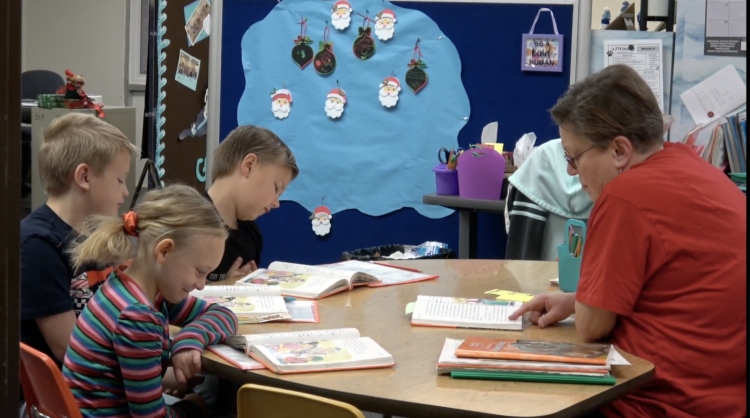
- Our school’s success is driven by our consistent, flexible small-group reading model, where every student receives daily instruction at their specific level and pace. These 30–60 minute groups provide explicit, targeted teaching that builds strong foundational literacy skills and accelerates growth for all learners. Strong foundational literacy skills are the key to continued academic success. Our teachers are trusted as professionals to choose the tools, strategies, and resources that best meet their students’ needs, and they collaborate in teams to analyze data and adjust instruction. We also prioritize character development and explicitly teach what it means to be “ready to learn,” emphasizing perseverance, grit, and doing one’s personal best. Together, these practices help us strive to create a strong, supportive, and effective learning environment for our students.
- 2. What significant challenges did your school face during your improvement efforts, and how did you address them?
- A key challenge we face is meeting the diverse needs of learners in every classroom. Students come with varying academic, social-emotional, and behavioral skills, and finding strategies that work for each student can be difficult. Addressing those needs often competes with instructional time, so we work as a school to support teachers and students and strive to maintain a positive school culture. Time is always a challenge—balancing core instruction with interventions to fill learning gaps. We continuously work to refine our schedule and try to strategically utilize paraprofessionals to maximize learning time and provide targeted interventions, ensuring every teacher and student receives the support they need to succeed.
- 3. How did professional development contribute to your school’s improvement efforts?
-
Professional development has played a key role in supporting both teachers and students. One of our strengths is the time dedicated for teachers to collaborate as grade-level and school teams. This collaboration allows them to discuss challenges, share strategies, and problem-solve together, improving instruction, school culture, and student outcomes. Over the years, our PD has focused on a variety of areas, including implementing and deepening our PBIS framework, which reinforces our “AJ Way” expectations—Be Respectful, Be Responsible, Be Ready to Learn—helping students develop social-emotional and behavioral skills. Additionally, PD such as the LETRS program has strengthened teachers’ knowledge and instructional practices in literacy, directly benefiting students’ reading growth and overall learning.
- 4. In what ways did family and/or community partnerships support your school’s success?
-
We live in a wonderful community! Strong family and community partnerships play a vital role in our students' success. Most parents ensure students attend school consistently, complete nightly reading and assignments, and collaborate with teachers. Our close-knit community amplifies these efforts—local businesses generously donate resources, volunteer their time, and help meet needs as they arise. Together, families and the broader community boost learning, support school goals, and ensure our school and teachers feel supported in their work.
- 5. How has ESEA funding (e.g., Title I, II, III) been strategically used to support student achievement?
- ESEA funding has been used to enhance student achievement by providing resources and support that directly impact learning. It has enabled us to purchase technology for all teachers, helping students see, hear, and interact with lessons more effectively. Funding has also allowed us to hire additional qualified paraprofessionals who support teachers in meeting diverse student needs in small groups. Additionally, key resources funded through ESEA support our targeted reading interventions and other learning goals, ensuring all students receive the instruction and tools they need to learn and grow.
- 6. What advice would you give to a school just beginning its improvement journey?
- To support a school beginning its improvement journey, our advice would be to stay focused on what matters most: supporting teachers and supporting students. An important way to do this is by building strong relationships through care, high expectations, and consistent routines. Provide students with opportunities to help them grow not only academically, but also socially, emotionally, and behaviorally. Give students tools to persevere, take risks, and develop a growth mindset. Don’t forget to celebrate small wins along the way to keep momentum and motivation high!
Stats
-
Category 1
Selected in 2025
-
Grades: k - 5
School Setting: rural
Town Population: 2
Student Enrollment: 310
Student Demographics:
Black/African American: 0%
Teacher/Student Ratio: 1:20
White/Caucasian: 93.5%
Hispanic: 5.9%
Hawaiian/Pacific Islander: 0%
Asian: 0%
Native American: 0.7%
Other: 0%
% Reduced Lunch: 57%
% ELL Learners: 0%
Founded: 1959 -
PRINCIPAL:
Emily Transtrum -
CONTACT:
535 Clay St
Montpelier, ID 83254
208-847-0477
etranstrum@blsd.net
ESEA Network
The National Association of ESEA State Program Administrators is dedicated to building the capacity of education professionals to provide disadvantaged children with a high quality education. Their ESEA Network website provides a host of resources to educators at all levels.
Connect With Us
 |
 |
 |
 |
Contact Us
admin@eseanetwork.org | 800-256-6452
532 North Franklin Street | Fort Bragg, CA 95437
About Us
The National Association of ESEA State Program Administrators (formerly the National Title I Association) is dedicated to building the capacity of education professionals to provide disadvantaged children with a high quality education. Their ESEA Network website provides a host of resources to educators at all levels.
Connect with Us
|
|
|
|